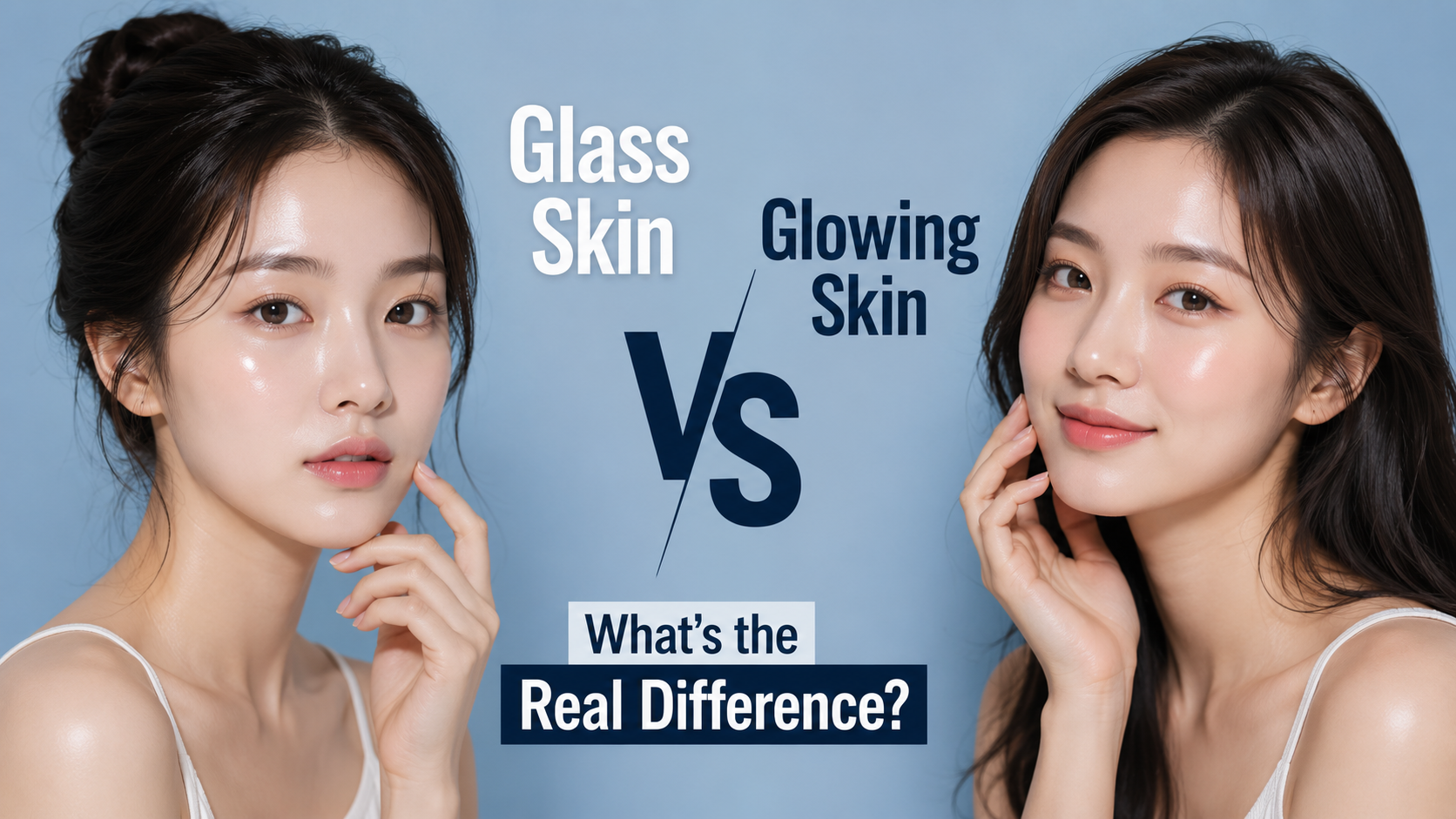
Glass skin vs glowing skin is one of the most confused comparisons in the beauty world, and it’s easy to see why — both terms describe skin that looks healthy, radiant, and camera-ready. But they’re not interchangeable. Understanding the real difference between glass skin and glowing skin can help you choose the right routine instead of chasing a look that doesn’t match your skin type or goals.
What Is Glass Skin?
Glass skin is a term that originated in Korean beauty culture, referring to skin so smooth, even-toned, and clear that it appears almost translucent — like a pane of glass. According to Forefront Dermatology, the look is defined by visibly minimized pores, an even tone, and a smooth surface with a luminous sheen, rather than just shine on the surface.
Key Characteristics of Glass Skin
- Extremely smooth, poreless-looking texture
- Even, uniform skin tone with minimal redness or discoloration
- A soft, reflective glow rather than visible oiliness
- Skin that appears hydrated from within, not just on the surface
What Is Glowing Skin?
Glowing skin is a broader, more universally achievable term. It simply describes skin that looks healthy, radiant, and well cared for — regardless of texture, pore visibility, or tone evenness. Dermatologist Dr. Jennifer Holman describes the look, as reported by Marie Claire, as skin with enhanced light reflection rather than a specific texture requirement.
Key Characteristics of Glowing Skin
- Healthy-looking radiance regardless of skin texture
- Can apply to any skin type, tone, or age
- Achievable through hydration, circulation, and general skin health
- Doesn’t require poreless or perfectly even skin
Glass Skin vs Glowing Skin: The Core Difference
The simplest way to understand glass skin vs glowing skin is this: glowing skin is the broader category, and glass skin is a specific, more demanding version of it. All glass skin is glowing, but not all glowing skin qualifies as glass skin. Glowing skin is about radiance and health. Glass skin adds two extra requirements on top of that — near-invisible pores and a completely even, smooth surface.
Why People Often Confuse the Two
Both Involve Hydration
Since dehydrated skin doesn’t reflect light well, both looks depend heavily on proper hydration. This overlap is where most of the confusion starts.
Social Media Blurs the Line
Filtered photos and ring-light lighting can make glowing skin look like glass skin on camera, even when the underlying texture is completely different in person.
Marketing Uses the Terms Interchangeably
Many skincare brands use “glass skin” and “glowing skin” as interchangeable marketing buzzwords, even though dermatologists treat them as distinct outcomes with different levels of difficulty.
Is Glass Skin Realistic for Everyone?
Not entirely — and that’s an important, honest point. As noted in Marie Claire, board-certified dermatologists point out that completely poreless, flawless skin isn’t physically achievable, since pores and natural texture are a normal part of skin. Genetics, skin type, and age all affect how close someone can realistically get to the “glass” look. Glowing skin, on the other hand, is achievable for virtually every skin type with the right routine.
How to Work Toward Either Look
Building a Routine for Glowing Skin
Focus on consistent hydration, gentle cleansing, and daily sunscreen. If you’re building your basics from scratch, our guide on 10 Skincare Myths You Need to Stop Believing covers common mistakes that quietly dull skin’s natural radiance.
Building a Routine for Glass Skin
Glass skin requires more precision — controlled exfoliation, lightweight layered hydration, and consistent barrier care. Our Korean 10-Step Skincare Routine breaks down exactly this kind of layered approach, which is where the glass skin method originated.
Common Mistakes When Chasing Either Look
Over-Exfoliating for a Smoother Surface
Aggressive exfoliation to minimize texture often backfires, damaging the skin barrier and creating the exact redness and irritation that ruins an even tone.
Over-Hydrating With Too Many Products
Layering excessive moisturizers and hydrating masks can overwhelm the skin barrier rather than improving it, sometimes leading to clogged pores and dullness instead of glow.
Choosing Products Based on Trends, Not Skin Type
A routine built for someone else’s oily or combination skin can leave dry skin worse off, and vice versa. Both glass skin and glowing skin depend on matching products to your specific skin needs.